What Is Structured Cabling and Why Does Your Colorado Springs Business Need It
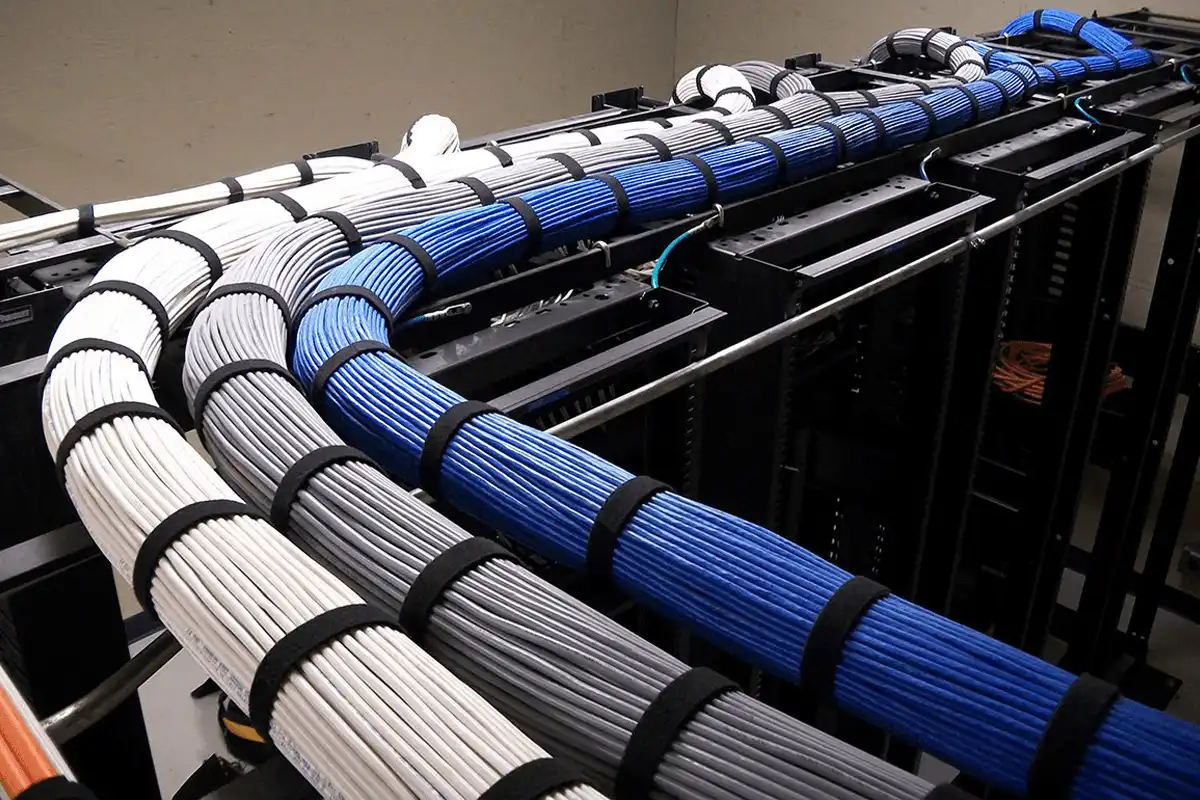
If you've ever looked behind your server rack or into a networking closet and seen a tangle of unlabeled cables running in every direction, you've seen what unstructured cabling looks like. Every cable is a mystery. Nobody knows which port connects to which room. Troubleshooting takes hours because tracing a single run means following it physically through walls and ceilings. Expanding the network means adding more cable to the chaos.
Structured cabling is the alternative — a deliberate, documented cabling infrastructure built to industry standards that makes your network maintainable, expandable, and reliable for years. Here's what it means in practice and why it matters for Colorado Springs businesses.
What Structured Cabling Actually Means
Structured cabling is a standardized approach to installing the physical network cables in your building. Instead of running individual cables between specific devices whenever you need them, structured cabling creates a complete, organized infrastructure:
- Cables run from a central telecommunications room (TR) or IDF closet to wall ports throughout the building
- Every run is labeled at both ends with matching identifiers
- Cables terminate at a patch panel in the TR, giving you a clean patchable interface to your switches
- Cable routes follow consistent pathways through conduit, cable trays, or J-hooks
- The whole installation is tested and documented with a certification report
The result is a network you can actually manage. Need to move a workstation? Change a patch cable, not the wall. Need to add a camera? The port is already there. Need to troubleshoot a drop? Check the label, find the run, test it.
Cat5e vs. Cat6 vs. Cat6A: Which One Does Your Business Need
Most new commercial installations use Cat6 or Cat6A cable. Here's the practical breakdown:
Cat5e
Supports Gigabit Ethernet at up to 100 meters. Still in widespread use, but it's effectively the floor for new installations — not a choice you'd make today if you're building fresh. Cat5e infrastructure installed 10–15 years ago is still functional and doesn't need to be torn out unless you're running into limitations.
Cat6
Supports Gigabit Ethernet at full spec and 10 Gigabit Ethernet at up to 55 meters. This is the current standard for most commercial installations. It's the right choice for the majority of Colorado Springs small and mid-size businesses.
Cat6A
Supports 10 Gigabit Ethernet at the full 100-meter run length. Larger diameter, more expensive, but future-proof if your business handles large file transfers, runs video-heavy workflows, or is planning significant expansion. Alpine IT recommends Cat6A for healthcare, creative agencies, and any environment with high data throughput requirements.
The cabling you install today will be in your walls for 15–20 years. Choosing Cat6 over Cat5e costs a modest premium at installation time. Ripping out and replacing cabling later because it can't support newer speeds is significantly more expensive and disruptive.
What a Proper Structured Cabling Installation Includes
When Alpine IT does a structured cabling installation for a Colorado Springs business, here's what that involves:
- Site survey and design: We walk your space and document all required drop locations — workstations, access points, cameras, printers, VoIP phones, TVs, and anything else that will need network connectivity
- Cable routing plan: We determine the cleanest pathways from the TR to each location, routing through walls, above ceilings, or in surface-mount conduit where needed
- Cable installation: Runs pulled, dressed neatly, and secured — no cable bundled so tightly it affects signal, no cable draped unsupported across ceiling grid
- Termination and patch panel: Each run terminates at a wall plate jack and at a corresponding port on the patch panel in the TR, both labeled with matching identifiers
- Cable testing and certification: Every run is tested with a certifier that validates it meets the Cat6 (or Cat6A) spec — pass/fail on wire map, length, attenuation, crosstalk
- As-built documentation: You receive a complete record of every run: port numbers, locations, cable length, and test results
Why Documentation Matters as Much as the Cable Itself
Most businesses with existing cabling have no documentation. The person who pulled the original cable is long gone. Nobody knows what's terminated where. When something breaks, you trace cables by hand.
This is one of the biggest differences between a professional structured cabling job and a "good enough" run-as-you-go installation. The physical cable is only half the investment. The documentation is what makes it maintainable for the next decade.
When Alpine IT completes a job, you receive a labeled patch panel, labeled wall ports, and a document that maps every port to its location in the building. Whoever manages your IT — internally or externally — can work from that documentation without needing to retrace anything.
Structured Cabling as the Foundation for Everything Else
Every other system Alpine IT installs depends on the cabling underneath it. Access points need a wired uplink to deliver reliable Wi-Fi. Security cameras need clean Cat6 runs for PoE power and video throughput. Access control readers and door controllers run over the same infrastructure. VoIP phones, digital signage, point-of-sale systems — they all terminate at a wall port.
When cabling is clean and documented, adding any of these systems later is straightforward. The port exists, the documentation tells you which switch port it terminates on, and you're connected. When cabling is ad hoc, every expansion becomes a project in itself.
This is why cabling is always step one when Alpine IT designs an integrated system. Get the physical layer right, and everything built on top of it is more reliable and easier to manage.
Signs Your Existing Cabling Needs Attention
Not every business needs a full recable. But there are clear signs that your existing infrastructure is limiting you:
- Intermittent drops on specific ports that come and go without explanation
- Cables running in ways that create trip hazards or aren't protected
- No documentation — nobody knows what's connected where
- Cat5e infrastructure being asked to carry 10G workloads
- Surface-mounted cables taped to walls instead of run properly inside them
- A networking closet where nothing is labeled and patch cables are a mess
Alpine IT can assess your existing cabling, test runs for spec compliance, and document what you have before recommending whether a partial remediation or full replacement makes more sense for your building and budget.
Structured Cabling Installation — Colorado Springs
Alpine IT designs and installs Cat6/Cat6A structured cabling systems for Colorado Springs businesses. Every run tested, every port labeled, full documentation at handoff.